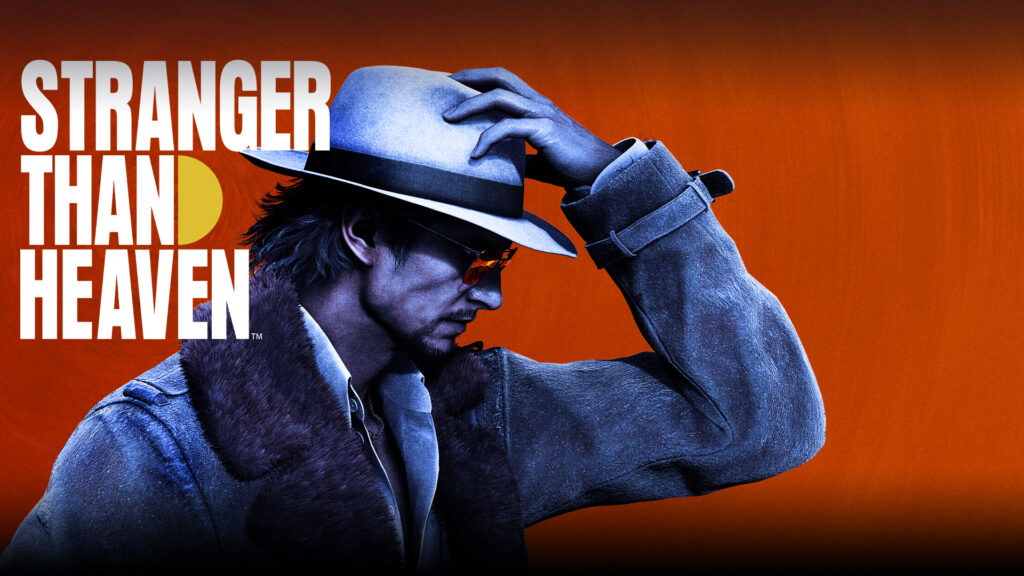
Releasing on 15th January 2027, big things are expected from Stranger Than Heaven. Already tracking well above RGG’s last flagship title, Like a Dragon: Infinite Wealth, in wishlists on Steam, excitement is building towards its release.
Video footage has been online for quite some time, showing off beautiful locations across three eras of Japan, all built around a very distinctive art style. So, to have the chance to sample just a small portion of what this game will offer was an opportunity that had to be taken.
Heading over to SEGA’s booth in Hall 7, it was clear that they had gone all out for every game they were showcasing. Stranger Than Heaven had its own custom-built booth, set inside an old jazz café and complete with a customised drum kit. The setting oozed cool, suave sophistication. But we all know that when it comes to anything RGG, the peace was never going to last long!
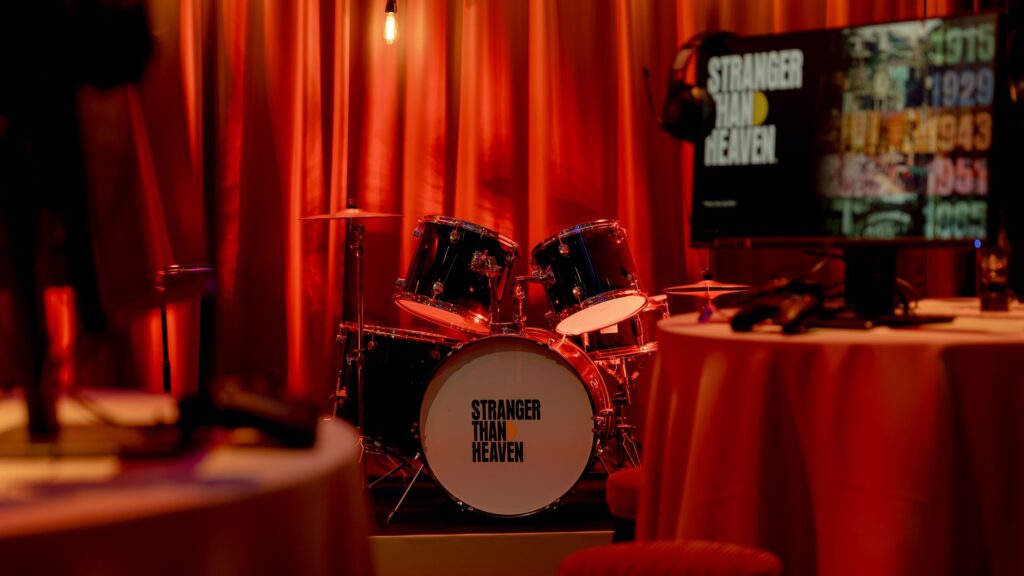
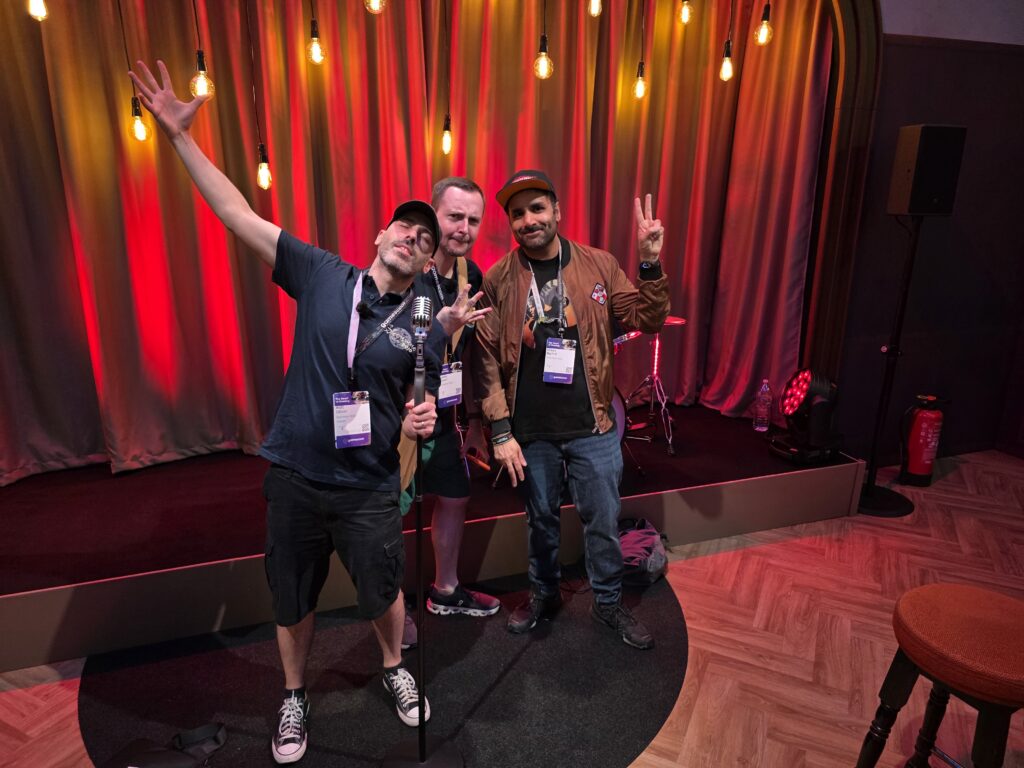
Upon entry, you had your own opporutnity to take a photo infront of the stage. Again, how can you say no to that!
As for the demo itself, you are presented with a 20-minute sample of the game’s combat system. The player is given three options: Beginner – hand-to-hand combat only; Intermediate – introducing weapons; or Advanced – a tough fight designed to test everything you have learnt. Given that the combat is a huge departure from the traditional RGG melee system, which uses the controller’s face buttons and is perhaps a little more button-mashy than others, Beginner was selected.
To be frank, this combat system will divide the crowd. Some will love it; others will hate it!
The way the combat works is that light and heavy attacks are assigned to each side of the body. To use each attack, you must use the L or R button/trigger, with L representing the left side and R the right. What stands out here is the requirement for very precise timing in order to maximise your opportunities to attack, while also being ready to block when required.
Again, blocking is tied to the left and right sides of the body. You hold down B to enter a guard and then press the required L or R input depending on where the attack is coming from. Additionally, there is also a dodge button, though this didn’t seem to offer too many advantages initially. Time your block perfectly and you send the enemy backwards, opening up an extended window to unleash your attack. Likewise, you can string combinations together using the trigger buttons to deliver some massive damage, and the impact of doing so is incredibly satisfying.
However, at times, the movement and responsiveness felt a little slow or clunky in comparison to previous RGG titles. Despite this, the combat is satisfying if you take the time to learn what it is trying to do. Some would argue that it feels a little more Soulslike.
After using Beginner mode to nail down the basic mechanics, it was onto Intermediate and weapons!
The same system applies here in terms of the basic mechanics, but weapon weight also plays a massive factor in the timing required. Using a basic knife allows for quick attacks delivered in greater numbers. The MASSIVE hammer you also had access to delivered insane damage, but if you missed, you were left open to being beaten down pretty quickly. The trick here was to time its use: get in, block or dodge, hit with the hammer and get out. Easier said than done, and the hammer absolutely added another level of sluggishness to the combat.
This mode took a good few tries to get through, but it was worth the effort. Time was short for the final Advanced mode. Essentially, this brought everything together into one package, with a fight taking place in one of the more beautiful locations shown in the game.
Visually, this game looks great overall. It has its own very distinct art direction. It’s more realistic than Like a Dragon, but not so much that it blends into the background alongside the AAA hyper-realistic visuals we see time and time again. Environments feel handcrafted, shops and buildings look lived in, and NPCs feel more like a part of the world, despite having the usual text-based pop-ups seen in almost all other RGG titles.
One criticism that must be mentioned, however, is the fuzziness and poor image clarity of the game. This type of issue is usually reserved for UE5 games where poor image clairty is common place. Whether this was because of the monitors being used or because the game is built in an upgraded version of the Dragon Engine but with not all the kinks worked out yet remains to be seen. Either way, this needs to be improved for the final build.
Since Gamescom, RGG has noted that it is taking feedback from the event on board for future builds and, ultimately, the final release.
The feedback here is simple: improve the combat responsiveness a little, offer larger timing windows – or difficulty options – for blocking, a proper combat tutorial and sort out the image clarity.
Despite those issues, this is a game that brings a lot of excitement with it, and the release cannot come soon enough!
Final Score – 8/10