Remember the Power Surge from SEGA at The Game Awards in December 2023?
We’ve already had Shinobi, a faithful modernisation of a ’90s classic which stunned in both its presentation and gameplay. Next up, releasing in 2027, we have Crazy Taxi: World Tour.
As with any retro revival project, there is always that slight feeling of trepidation around whether it will be a faithful modernisation or whether the new game will lose the soul of the original in an attempt to appeal to a modern audience.
Thankfully, after getting our hands on it at Gamescom, those fears have pretty much disappeared.
Picture this… It’s 1999/2000. You’re opening your new copy of Crazy Taxi on Dreamcast and immediately being smashed in the face with music from The Offspring, Bad Religion and more. Add in supreme visuals for the time, mostly 60 FPS performance and absolutely insane handling, and you had the perfect arcade title sitting in your own home.
It was loud, ridiculous, fast and completely unapologetic about it.
Luckily for everyone who remembers that era, we can safely say that Crazy Taxi: World Tour restores the soul, feel and look of the original, while naturally bringing the visuals into the modern age. More importantly, it handles exactly how a Crazy Taxi game should.
In short… it is superb!

Hands-On With World Tour
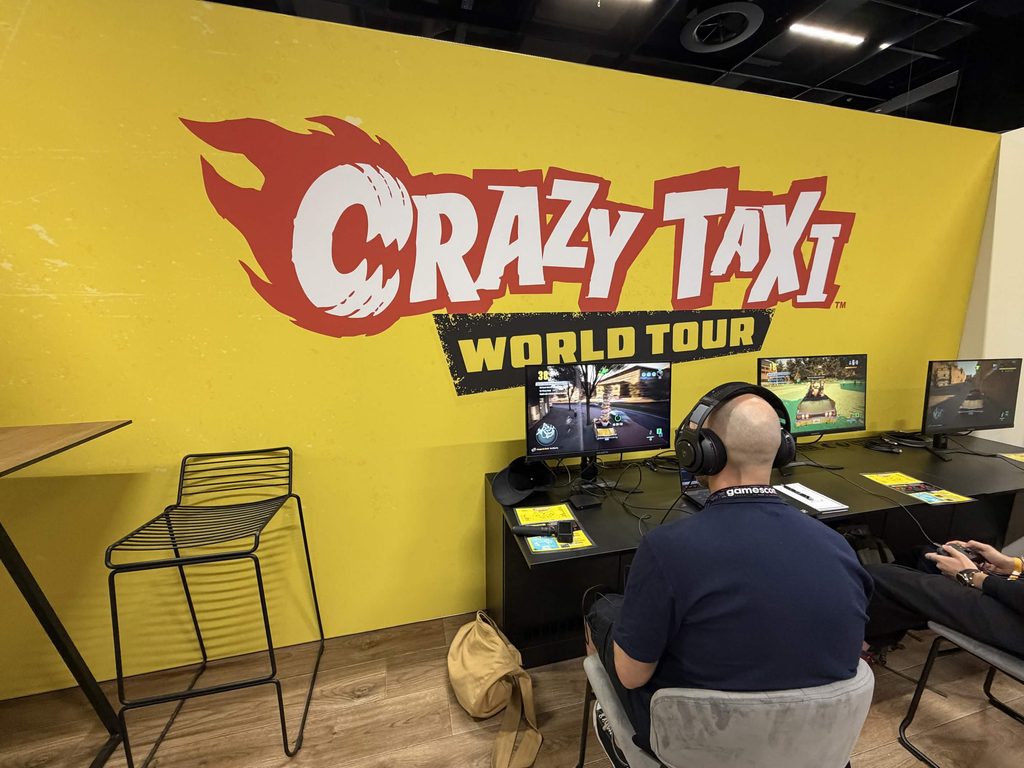
We had around 30 minutes hands-on with the demo available at Gamescom via a SEGA preview, playing the Cologne map through World Tour Mode.
The standard Crazy Taxi premise remains very much intact. Pick up passengers, drive like an absolute lunatic and get them where they need to go as quickly as possible. However, World Tour adds plenty on top of that familiar formula, with additional challenges, boost mechanics, special moves and much more besides.
Challenges included speeding towards checkpoints, completing slaloms, smashing objects and, of course, dropping passengers off within a set timeframe. It gives you plenty to do outside of simply driving from A to B and makes the city feel more like a gigantic arcade playground.
Within this mode, we encountered two main types of passenger:
- Standard passengers – deliver as many people to their destinations as quickly as possible to earn money.
- Special NPC passengers – deliver specific characters to their locations while completing their own bizarre challenges along the way. These are considerably more elaborate than your standard fares and inject even more personality into proceedings. One guy literally wanted us to go flying off a cliff!
It feels like SEGA understands that simply recreating the original gameplay loop would not be enough for a completely new Crazy Taxi game. Instead, the core formula is still there, but there are now more distractions, objectives and challenges scattered throughout the world.
Handling and Special Moves
Gameplay was incredibly responsive, the special moves were easy to pull off and the new boost function is a great addition.
Boost effectively replaces the jump function from some of the older games and quickly becomes a core part of getting around the city. While driving around the world, you can pick up additional money and boost power, allowing you to use it more regularly.
It very much feels like a staple mechanic rather than something simply bolted onto the existing formula.
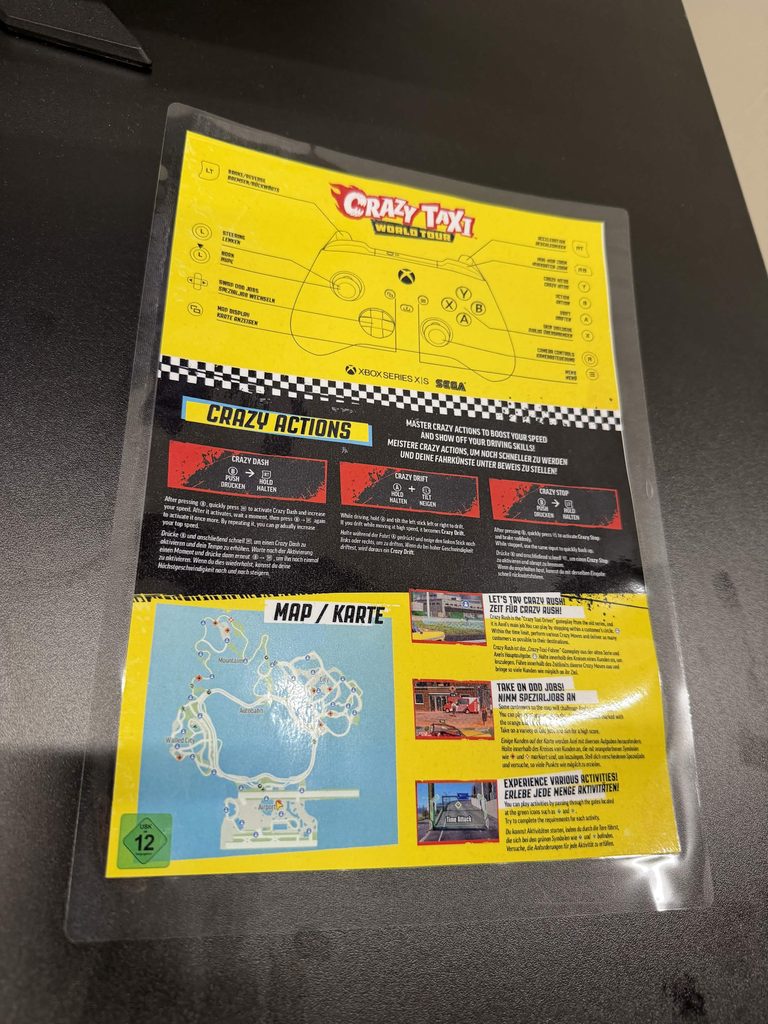
The familiar Crazy moves also return:
- Crazy Dash
- Crazy Stop – this existed in the older games but could sometimes be pretty tough to pull off consistently.
- Crazy Drift
Pulling off these moves earns additional money while also gradually contributing towards your recharging boost meter.
Importantly, none of this feels intrusive.
You are not constantly being bombarded with mechanics or meters that get in the way of simply enjoying the driving. Instead, they complement the traditional Crazy Taxi gameplay and are incredibly satisfying when you manage to string everything together.
There is something wonderfully chaotic about drifting around a corner, narrowly avoiding traffic, smashing through objects and immediately boosting towards your passenger’s destination.
That feeling is Crazy Taxi, and World Tour absolutely gets it.
Challenges and Replayability
Some of the in-world challenges have very tight time windows, and I can already see these requiring a fair amount of practice to beat.
Personally, I think this is a good thing.
Crazy Taxi has always been a game built around replaying runs, learning routes and gradually figuring out how to shave seconds off your times. World Tour appears to understand that, with challenges that should provide plenty of incentive to return and improve your performance.
Add in a proper Arcade Mode alongside a Crazy Box mode packed with challenges, and there should be plenty here to keep both returning players and newcomers coming back for more. For an arcade-style game like this, replayability is going to be incredibly important, and what we played suggests SEGA has thought carefully about that.
Performance
Performance was generally very good, with 60 FPS being the target on consoles.
The demo largely maintained that target, although we did notice some drops when driving through particularly busy areas of the map. Considering the game is still some way from its final 2027 release, I would fully expect these areas to be tightened up during optimisation.
More importantly, even when things became incredibly chaotic on screen, the game remained responsive.
For something as fast-paced as Crazy Taxi, that responsiveness is absolutely essential.
Final Thoughts
Half an hour with this game absolutely flew by.
I genuinely did not want to put the controller down when our session ended, which is probably one of the biggest compliments I can give it.
In short, Crazy Taxi: World Tour feels like a faithful modernisation of one of the most iconic Dreamcast games of all time. It does not feel embarrassed about what Crazy Taxi used to be, nor does it appear interested in completely reinventing it for the sake of being modern. Instead, SEGA seems to have looked at what made the originals work, kept that unmistakable arcade insanity intact and then built additional mechanics and modes around it.
The handling feels right. The speed feels right. The chaos feels right and, perhaps most importantly, it feels like Crazy Taxi.
Naturally, we also couldn’t resist asking a cheeky Shenmue-related question while we were there.
The official SEGA response?
“No comment.”
Make of that what you will…